


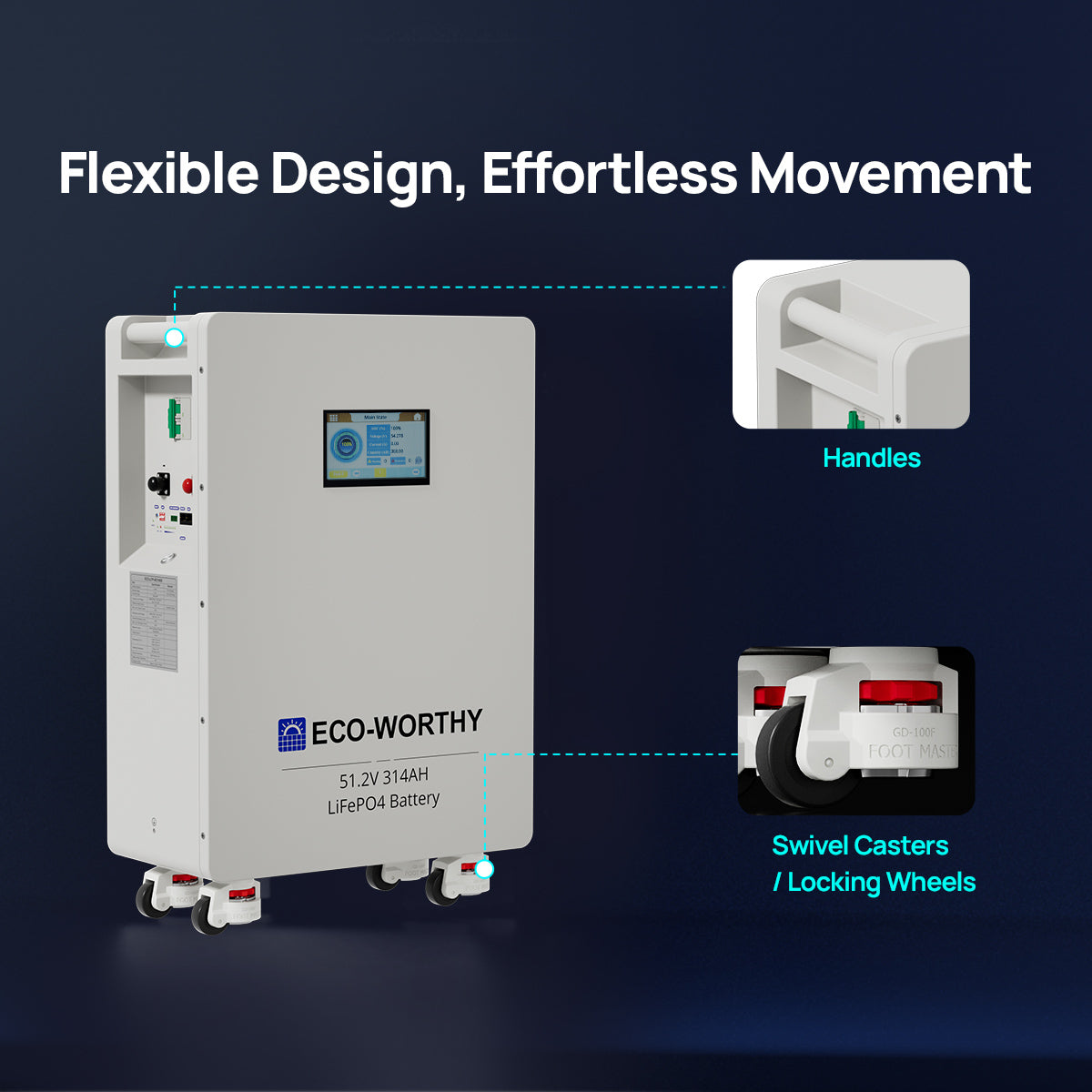
Achieve total energy independence with this high-capacity solar storage system. The 51.2V 314Ah LiFePO4 battery (expandable to 15 units) pairs with a powerful 10kW off-grid inverter, supporting 120V/230V output for whole-home backup. With 10,000+ cycles, advanced BMS protection, and mobile cart design, it offers a durable, scalable, and safe power solution for off-grid living or emergency readiness.
Pictures
Videos
💎Prime Day Sale
Eco-Worthy 16KWh Home Backup Power Bundle With 48V 314Ah LiFePO4 Lithium Battery and 10kW 48V AIO Off Grid Inverter
Eco-Worthy 16KWh Home Backup Power Bundle With 48V 314Ah LiFePO4 Lithium Battery and 10kW 48V AIO Off Grid Inverter
Regular price
£2,969.98
Sale price
£2,969.98
Regular price
£3,599.99
Unit price
per
Taxes included.
Shipping calculated at checkout.
SKU:
SKU:UK-L03L314AHJC-NKEU10KW-1
Read more
Extra £200 Off Now,The Offer May End Early
Extra £200 OFF
💥 Offer ends soon:💥 Extra £200 OFF
Total price
£2,969.98
Couldn't load pickup availability

Free Shipping

Return Guarantee

Secure Payment
or 4 interest-free payments of £742.49 with
Installments available at checkoutShop with Confidence at Eco-Worthy

Free & Fast Delivery

14-Day Money-Back Guarantee

Up To 10-Year Warranty

Lifetime Customer Support
Pay with ease
Trusted delivery


ECO-WORTHY Home Backup Power: 16.08kWh Battery + 10kW Inverter
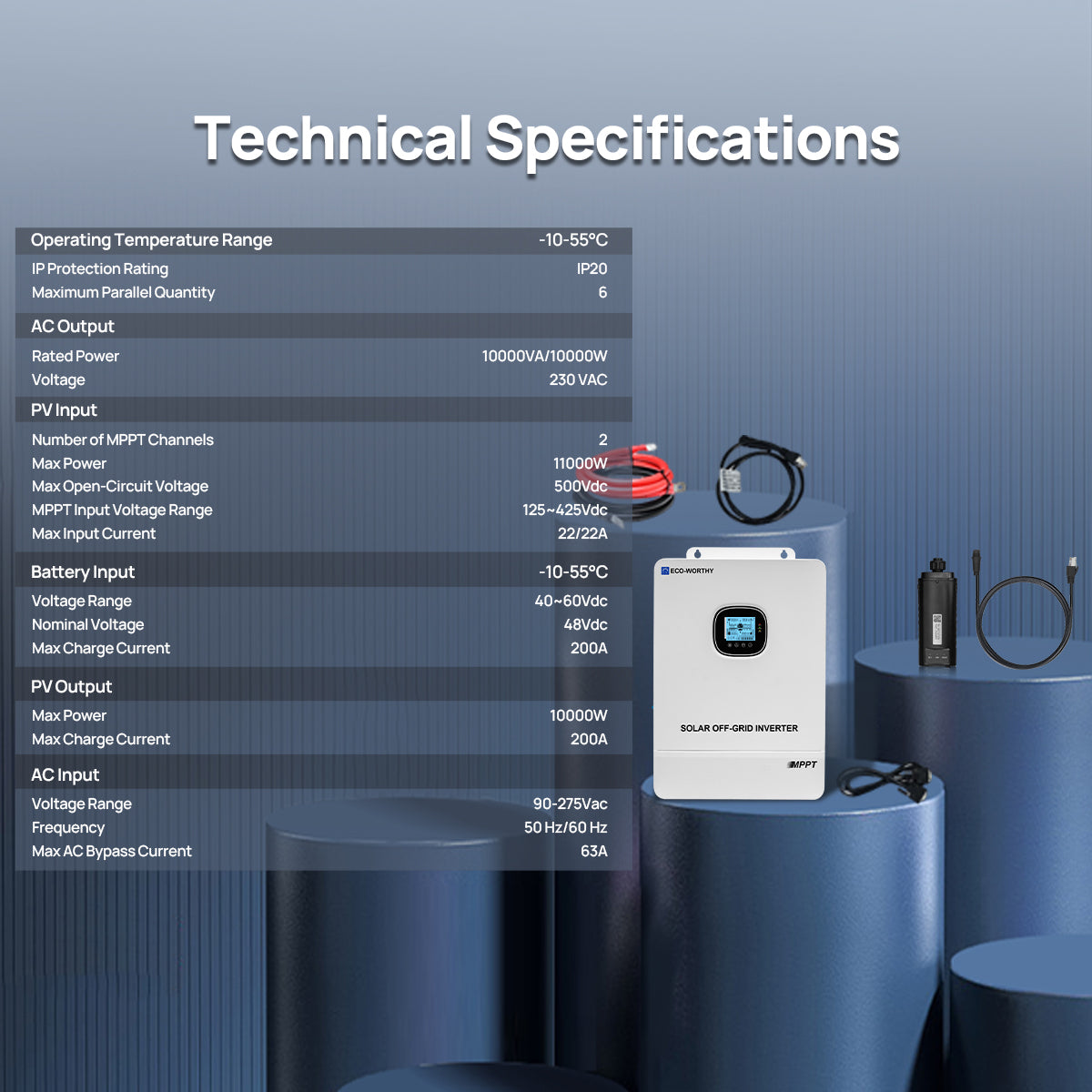
Technical Specifications
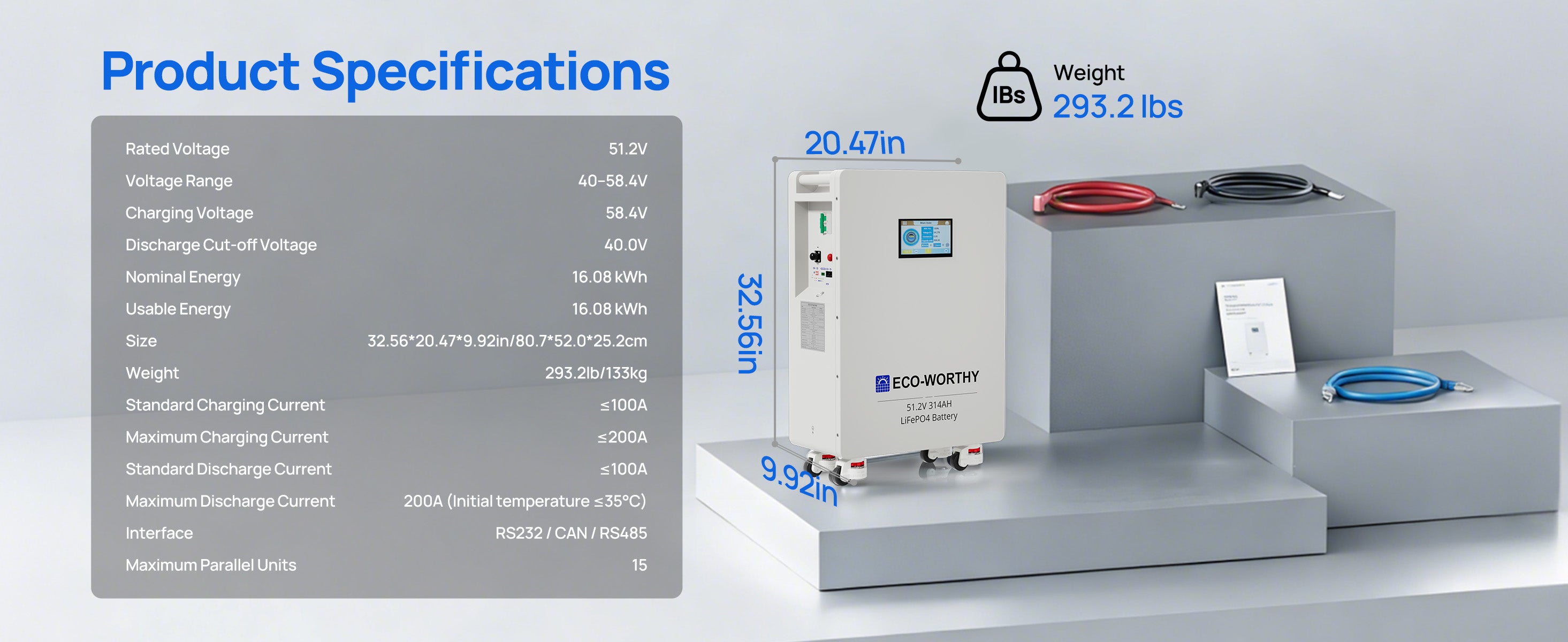
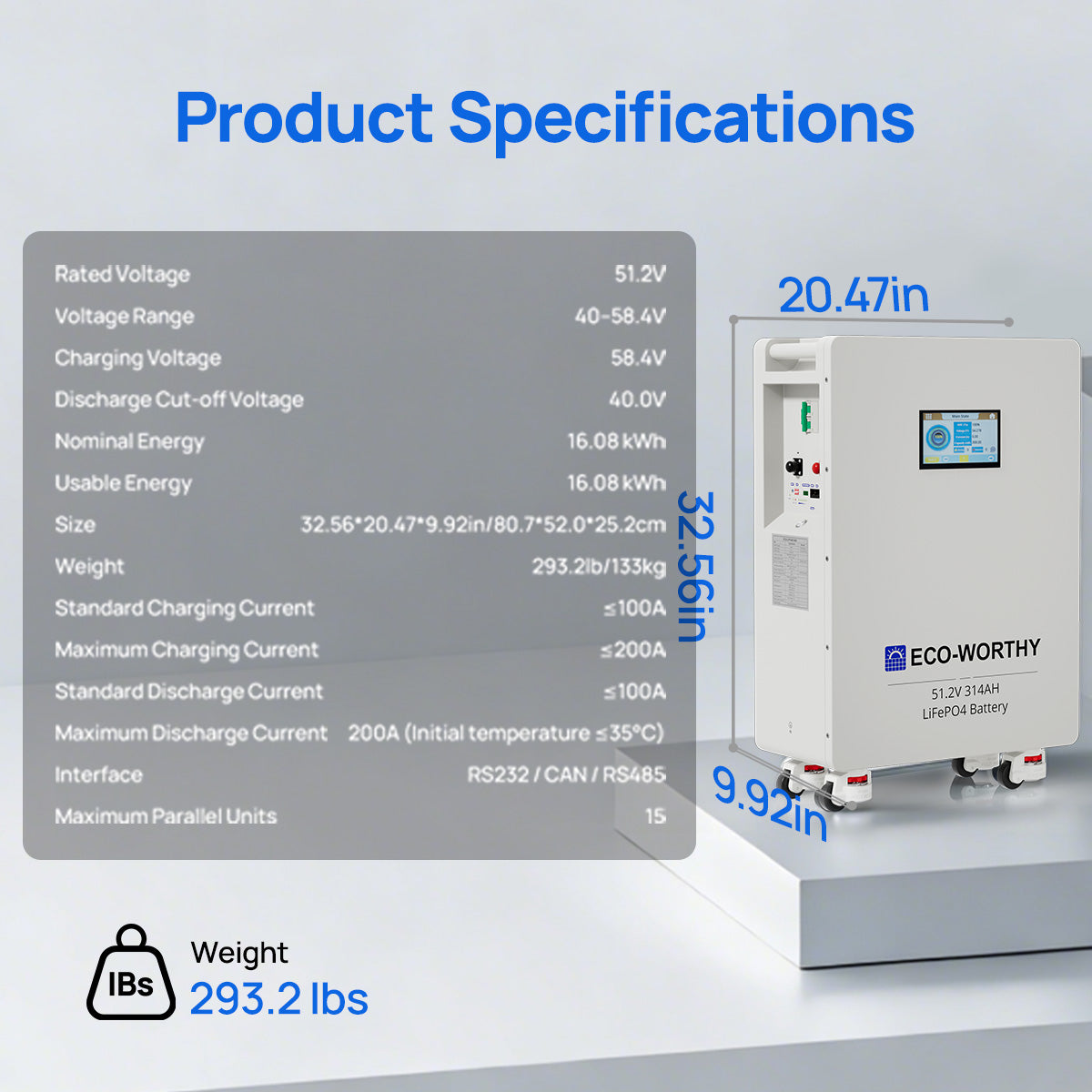
48V 314Ah Lifepo4 Lithium Battery
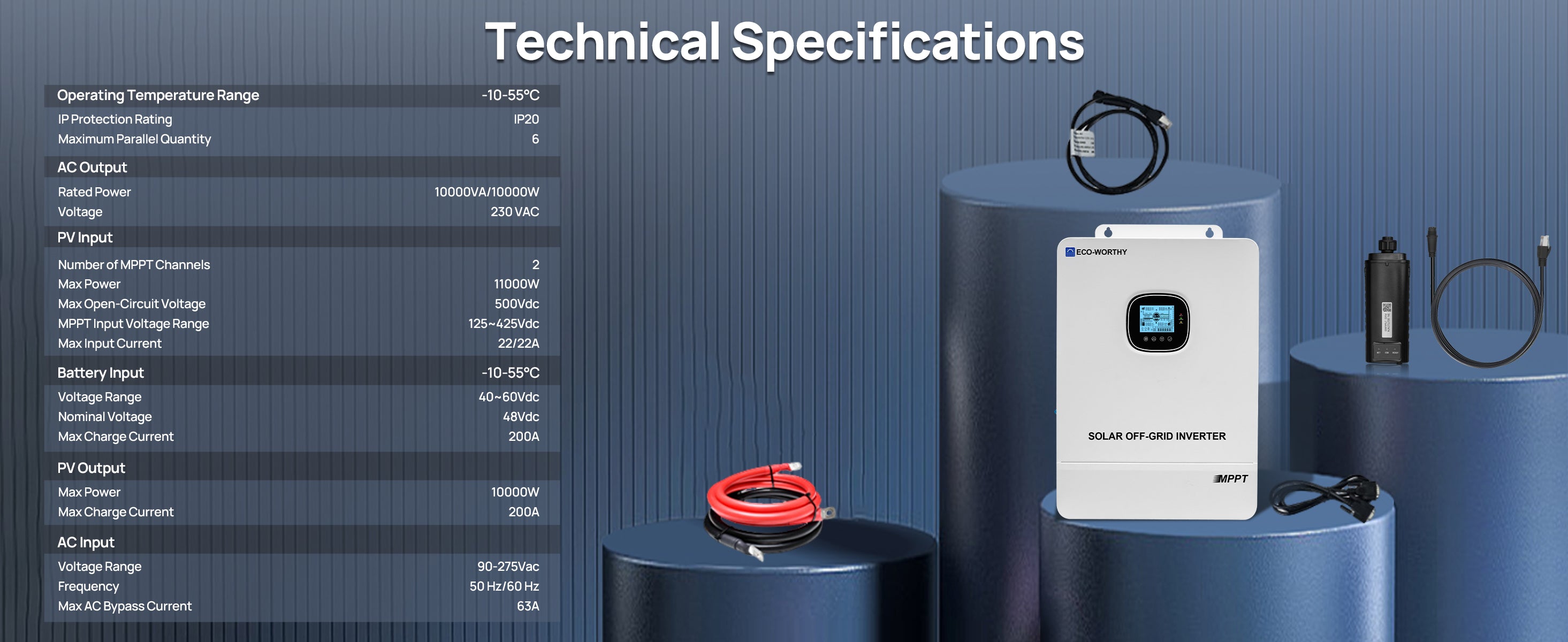
10000W Solar Off-grid AIO Inverter
Battery Capacity:
314Ah
Battery Power:
16.08kWh
Rated Voltage:
51.2V
Voltage Range:
40~58.4V
Maximum Charge/ Discharge Current:
150A
Charge Temperature Range:
0-55℃
Disharge Temperature Range:
﹣20-55℃
Maximum Charge Voltage:
58.4V
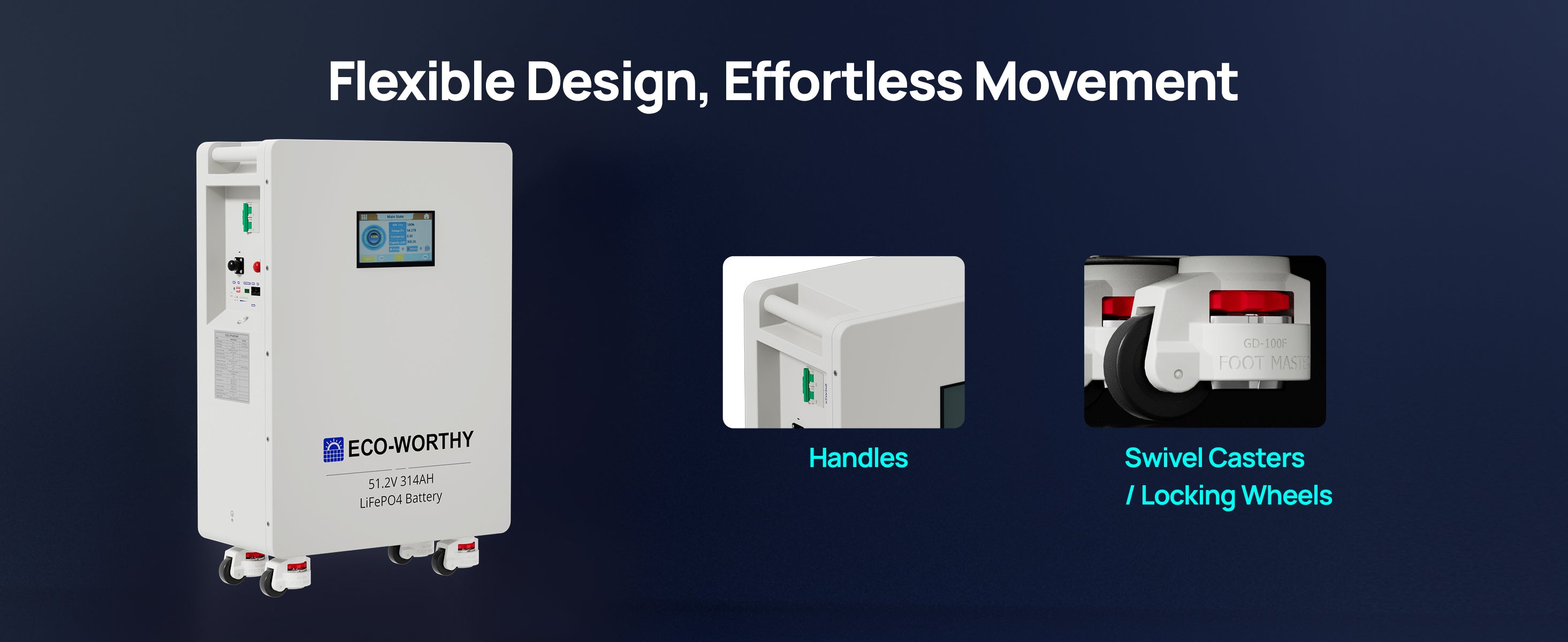
Battery Weight:
293.2lb/133kg
Battery Size:
32.56*20.47*9.92in/80.7*52*25.2cm
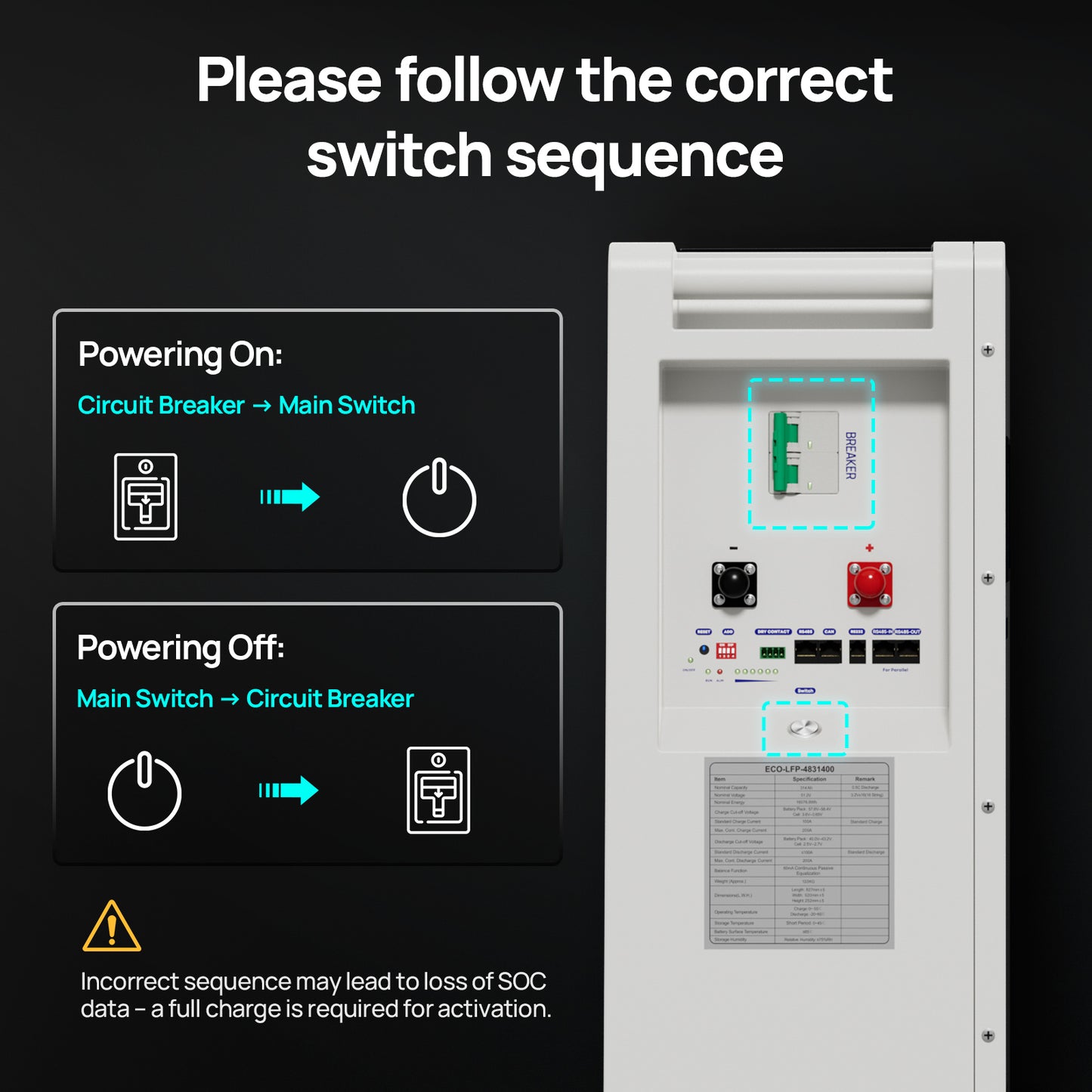
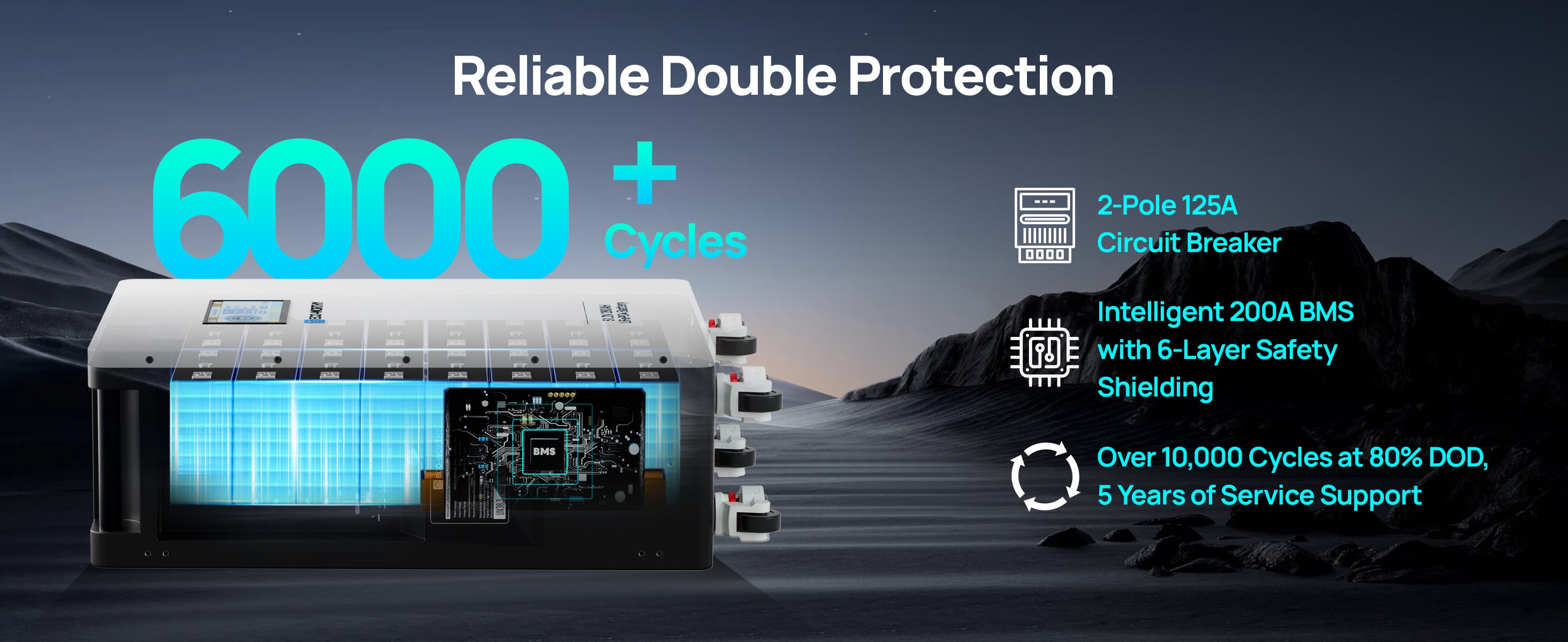
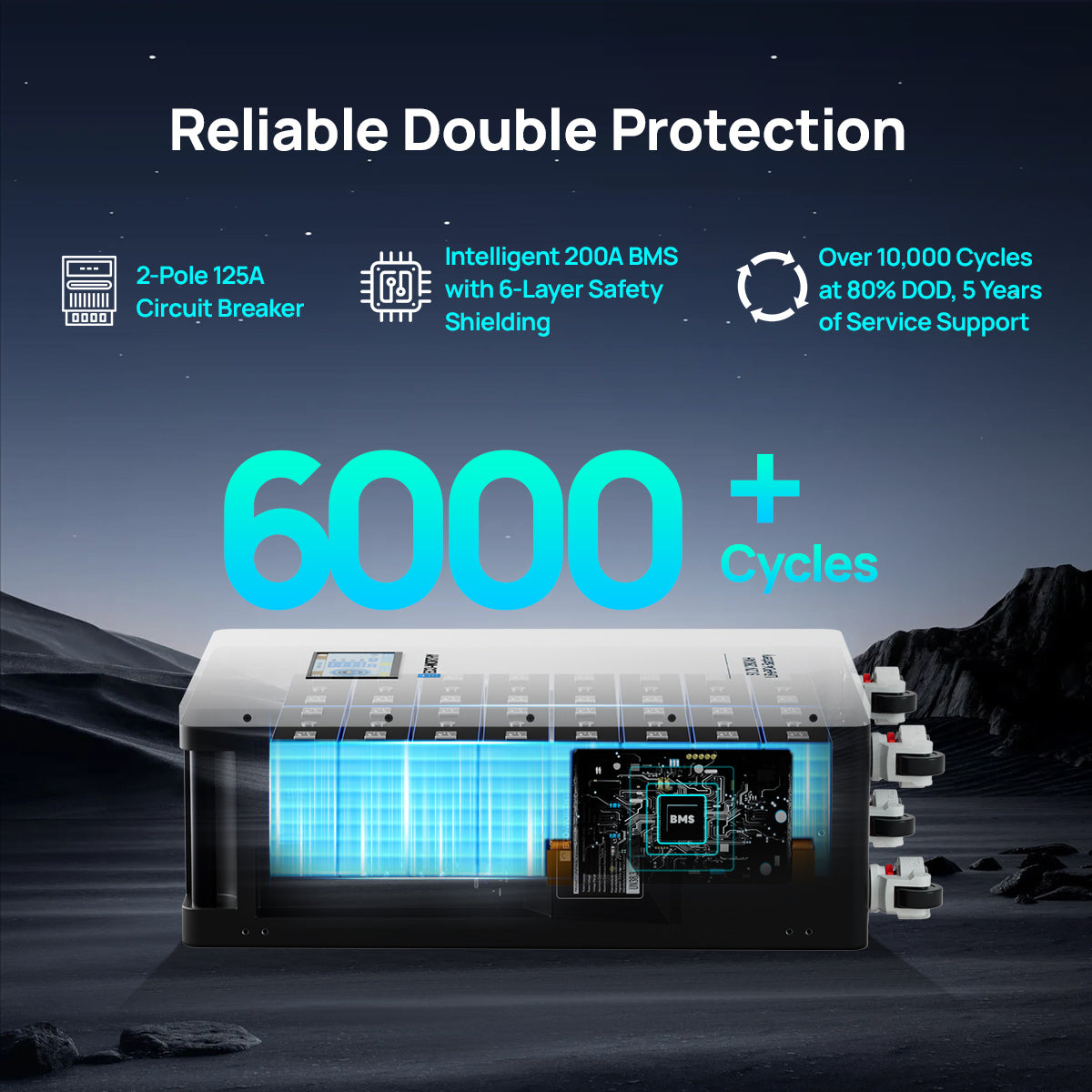
Circuit Breaker:
2*125A(250A)
Max. parallel number:
15pcs
BMS Brand:
PACE BMS
Rated Output Power:
10000 W
Max. Peak Power:
20000 W
Rated Output Voltage:
230Vac (Single Phase)
Load Capacity of Motors:
6HP
Rated AC Frequency:
50/60Hz
Waveform :
Pure Sine Wave
Switch Time:
10ms (Typical)
Parallel Capacity:
1-6 Units
Overload Protection:
After overload protection is triggered, the inverter will restart after 3 minutes. Five consecutive overloads will shut down the output until the inverter is restarted. (102% < Load < 110%) ± 10%: Fault and output shutdown after 5 minutes; (110% < Load < 125%) ± 10%: Fault and output shutdown after 10 seconds. Load > 125% ± 10%: Fault alarm and output shutdown after 5 seconds.
Battery Type:
Li-ion / Lead-Acid / User Defined
Rated Battery Voltage:
48 Vdc
Voltage Range:
40 to 60 Vdc
Max. Grid/Generator Charging Current:
150A
Max. Hybrid Charging Current:
200A
Number of MPPT Trackers:
2
Max. PV Array Power:
5500W+5500W
Max. Input Current:
22A+22A
Max. Voltage of Open Circuit:
500Vdc/500Vdc
MPPT Voltage Range:
125 to 425 Vdc
Input Voltage Range:
90-275Vac
Frequency Range:
50/60Hz
Bypass Overload Current:
63A
MPPT Tracking Efficiency:
99.9%
Max. Battery Inverter Efficiency:
92%
Dimensions:
620x445x130mm
Weight:
27kg
Protection Degree:
Protection Degree IP20, Indoor Only
Operating Temperature Range:
Range -10~55℃, >45℃ derated
Noise:
<60dB
Cooling Method:
Internal Fan
Embedded Interfaces:
RS485 / CAN / USB / Dry contact
External Modules (Optional):
Wi-Fi / GPRS




Included in the Box

Frequently Asked Questions
How do you test lithium battery performance?
+
When measuring the battery's rated voltage, it is recommended to first disconnect the connection wires between the battery and the load, inverter, and charger to ensure accurate results.
What’s the relationship between lithium battery voltage and SOC?
+
①During battery use, it is recommended to keep the SOC at 20%~80% to extend the battery life (charge to at least 13.3V) ②If the battery is not used for a long time (more than half a year), at least 50% of the power should be guaranteed, otherwise the battery may be over-discharged and damaged. ③After fully charged, if the battery voltage is greater than or equal to 13.3V after one hour without any connections, it is within the normal range. ④This table is only the test result under ideal conditions. After adjusting to the correct parameters, the voltage drops to 13.26V, which does not prove that the battery capacity is insufficient. The actual capacity needs to test the power of the connected load and the length of use.
How to activate a protected lithium battery?
+
A:Take 12.8V battery as an example, when the voltage drops to 0~2V, the battery BMS may enter protection state, and the battery needs to be reactivated. Method 1: Use an AC-DC LiFePO4 Lithium charger with activation function, set the charging voltage to 14.6V for charging. After 30~60 minutes, use a multimeter to measure the voltage. If the voltage changes, continue to charge. Method 2: Use a solar panel and controller with activation function. In an environment with good lighting conditions, connect the solar panel, controller, and battery, and set the charging voltage to 14.6V for charging. After 30~60 minutes, remove the battery connection wire, use a multimeter to measure the voltage. If the voltage changes, continue to charge.
Solar Panel Performance Testing Method
+
Disconnect all wires from the solar panel. Use a multimeter to measure both short-circuit current (Isc) and open-circuit voltage (Voc) under sunny outdoor conditions.Note: Performance may vary due to controller temperature and battery charge level.
What kind of warranty and support do you offer?
+
We provide up to a 10-year warranty on key battery models, along with U.S.-based support. Our team assists with installation guidance, troubleshooting, and system planning to ensure a smooth experience.