


ECO-WORTHY INVT 6kW 48v IP66 Hybrid Inverter With G99 Certified
ECO-WORTHY INVT 6kW 48v IP66 Hybrid Inverter With G99 Certified
SKU:
SKU:UK-L03NKUK6KWIVNT-1
When purchased together with an ECO-WORTHY 48V 100Ah wall-mounted battery or 48V 314Ah lithium battery, installation support options are available. Contact customer service for details.
Total price
Couldn't load pickup availability

Free Shipping

Return Guarantee

Secure Payment
or 4 interest-free payments of £249.99 with
Installments available at checkout
Shop with Confidence at Eco-Worthy

Free & Fast Delivery

14-Day Money-Back Guarantee

Up To 10-Year Warranty

Lifetime Customer Support
Pay with ease
Trusted delivery


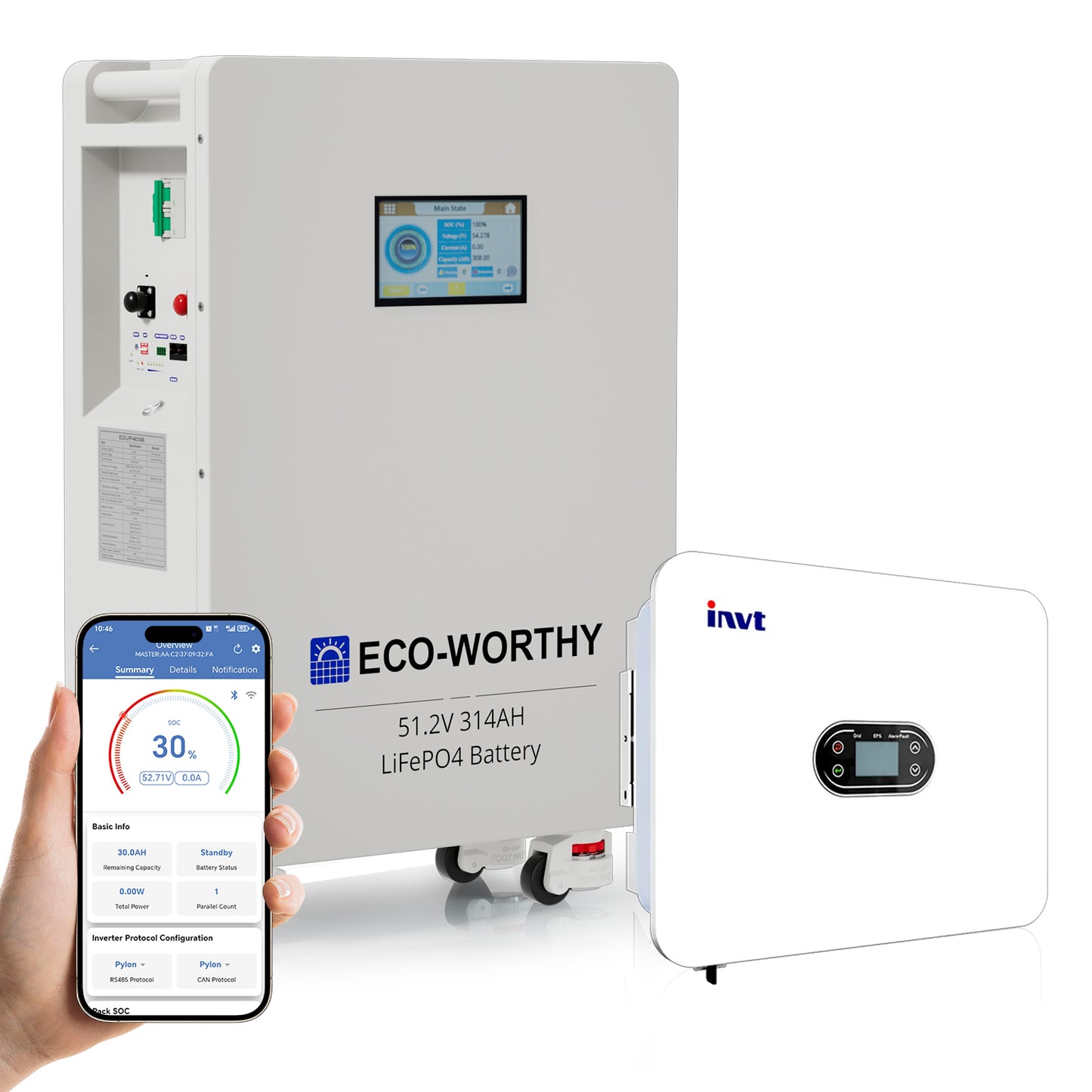

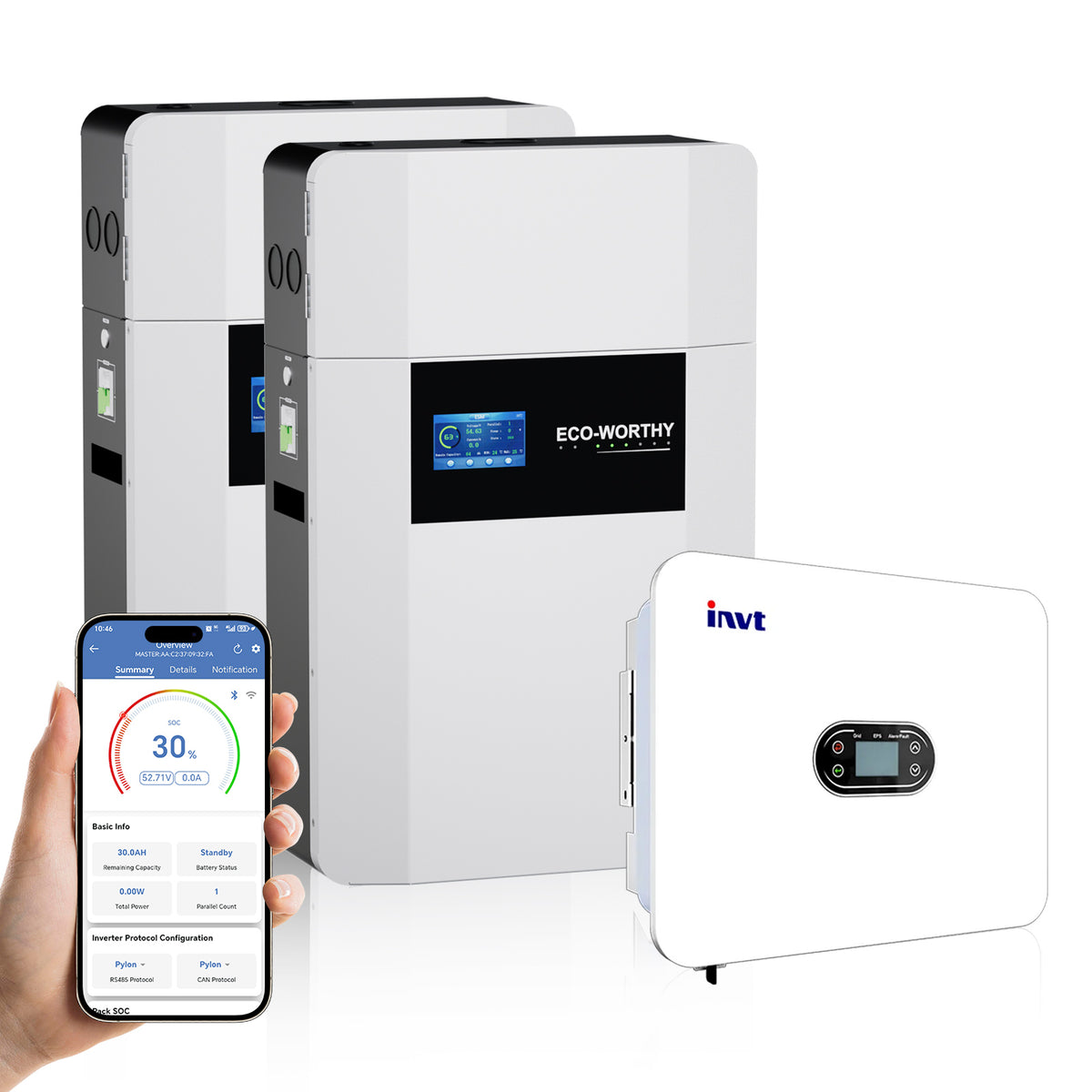

INVT 6kW IP66 Hybrid Inverter With G99 Certified
Technical Specifications
Battery type
Lithium battery or lead-acid battery
Battery voltage (V)
40-60
Maximum charge and discharge current (A)
100
Communication mode
CAN
Maximum input power (W)
4500
Maximum input voltage (V)
600
Start-up voltage (V)
100
Rated voltage (V)
240
MPPT voltage (V)
100-550
MPPT channels
2
Maximum input current (A)
16
Maximum input short-circuit current (A)
20
Rated output power (VA)
3000
Maximum output power (VA)
3300
Maximum output current (A)
15
Rated voltage (V)
230
Rated frequency (Hz)
50
Total harmonic distortion of current (@ rated power)
<3%
Maximum output power (VA)
3000
Maximum output current (A)
15
Peak output power, time (KW, s)
4.5,10
Rated output voltage, frequency (V, Hz)
230, 50
THDv (@ rated power)
<3%
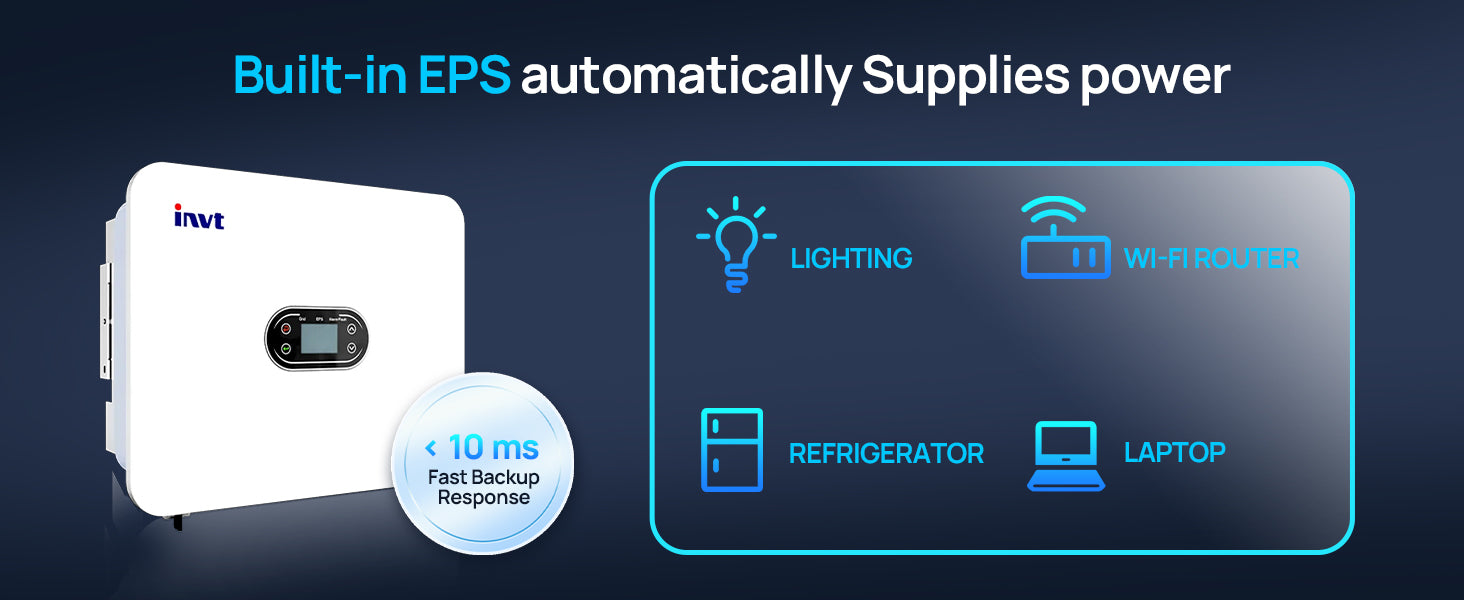
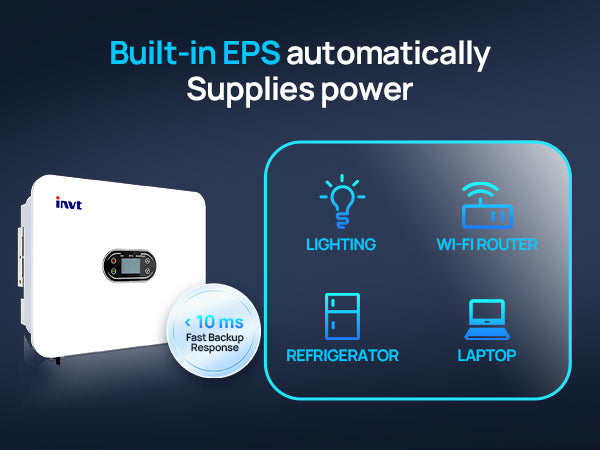
Switching time (ms)
<10
Ambient temperature
-30℃~+60℃
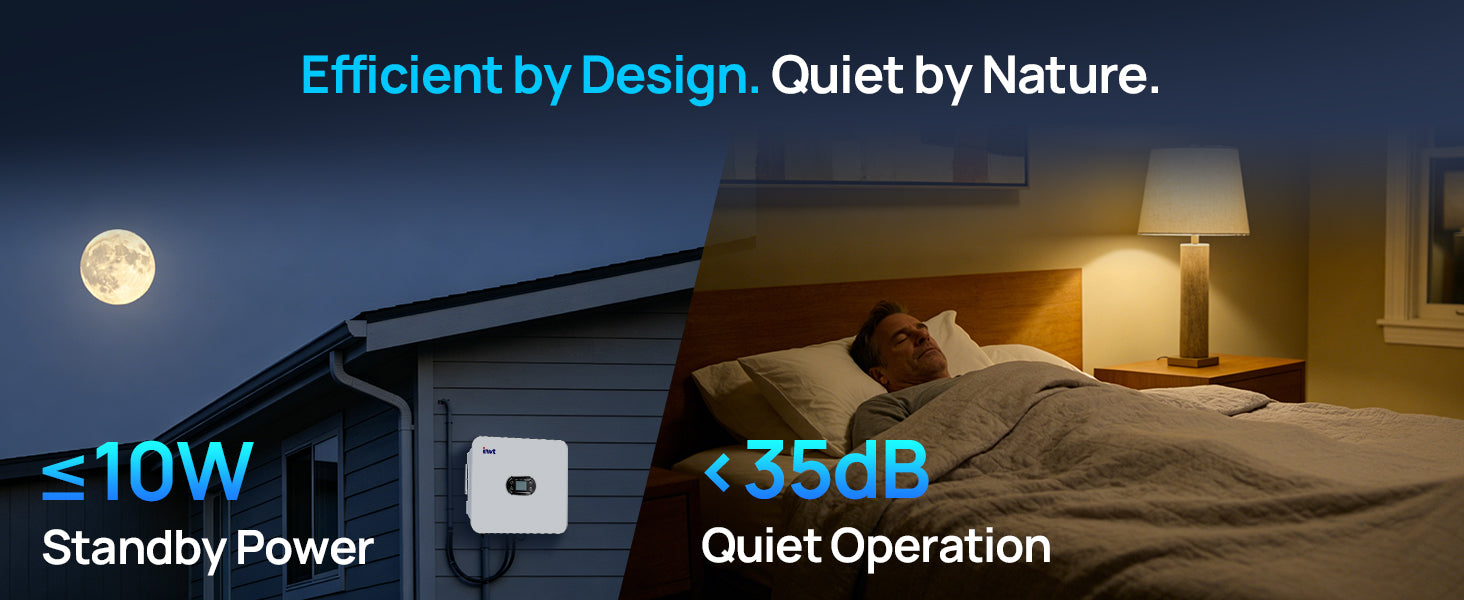
Standby power (W)
<10
Topology
High-frequency isolation (for battery)
Ingress protection
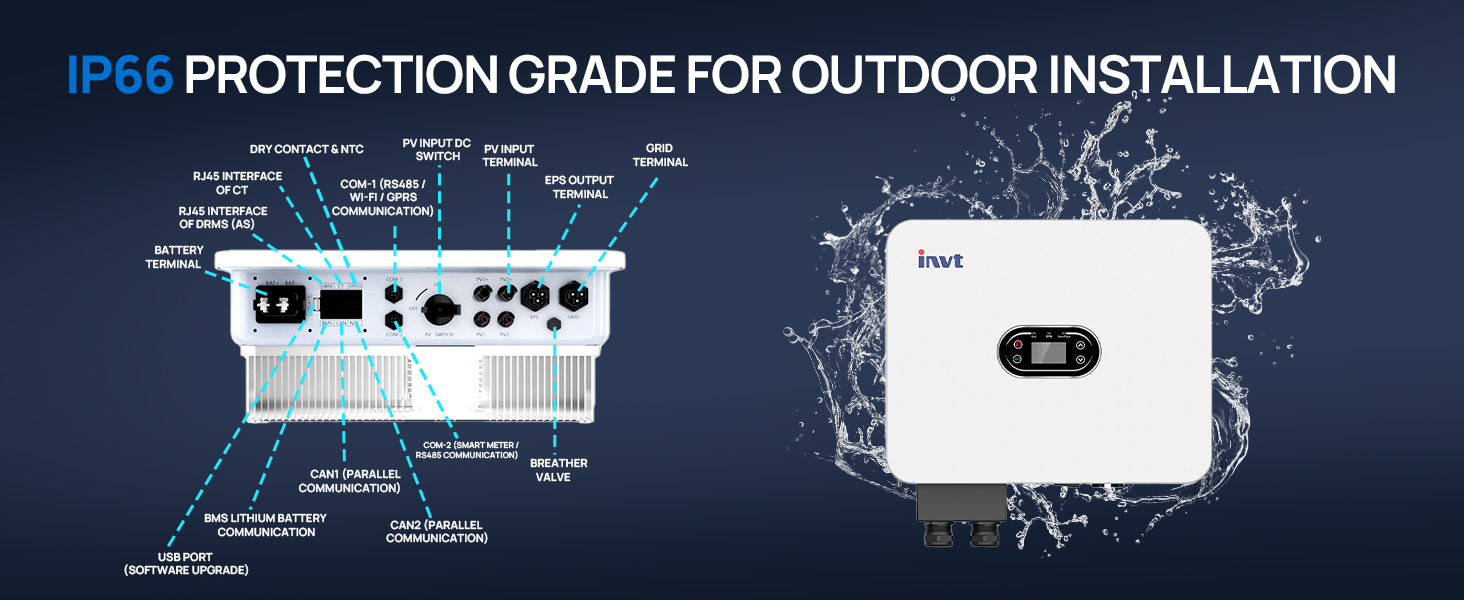
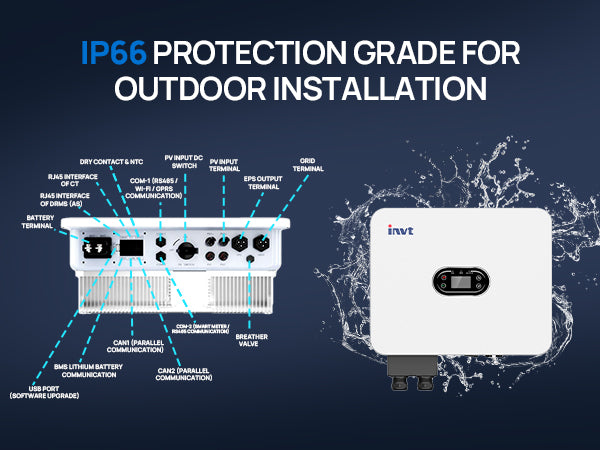
IP66
RH
0~100%
Communication
RS485 & CAN & Wi-Fi & 4G & LAN & Bluetooth
Maximum working altitude (m)
4000
Noise
≤35dB
Cooling mode
Natural cooling
Display
LCD
Dimension
490*395*200
Weight
21.35Kg
Battery Capacity:
314Ah
Battery Power:
16.08kWh
Rated Voltage:
51.2V
Voltage Range:
40~58.4V
Maximum Charge/ Discharge Current:
150A
Charge Temperature Range:
0-55℃
Disharge Temperature Range:
﹣20-55℃
Maximum Charge Voltage:
58.4V
Battery Weight:
293.2lb/133kg
Battery Size:
32.56*20.47*9.92in/80.7*52*25.2cm
Circuit Breaker:
2*125A(250A)
Max. parallel number:
15pcs
BMS Brand:
PACE BMS
Items
ECO-LFP48100WM01
Rated voltage
51.2V
Max.voltagerange
58.4V
Low voltage cut-off
40.0V
Nominal energy
5.12KWh
Usable energy
5.12KWh
Nominal capacity
100Ah
Dimension
18.23*8.93*20.47in/46.3*22.7*52cm
Weight
109lbs/50kg
Standard charge current
≤50A
Max.charge current
100A
Standard discharge current
≤50A
Max.discharge current
100A(initialtemp.≤35°C)
Communication port
RS485/CAN/RS232
Max.parallel number
32pcs
Rated capacity
100Ah(0.5C,77°F)
Operating temperature
Charge: -20~55°C Discharge: -20~55°C
Cycle Life
≥6000 cycles @ 25 °C, 0.5C charge / 0.5C discharge, ≥80% SOH
Warranty
10 Years


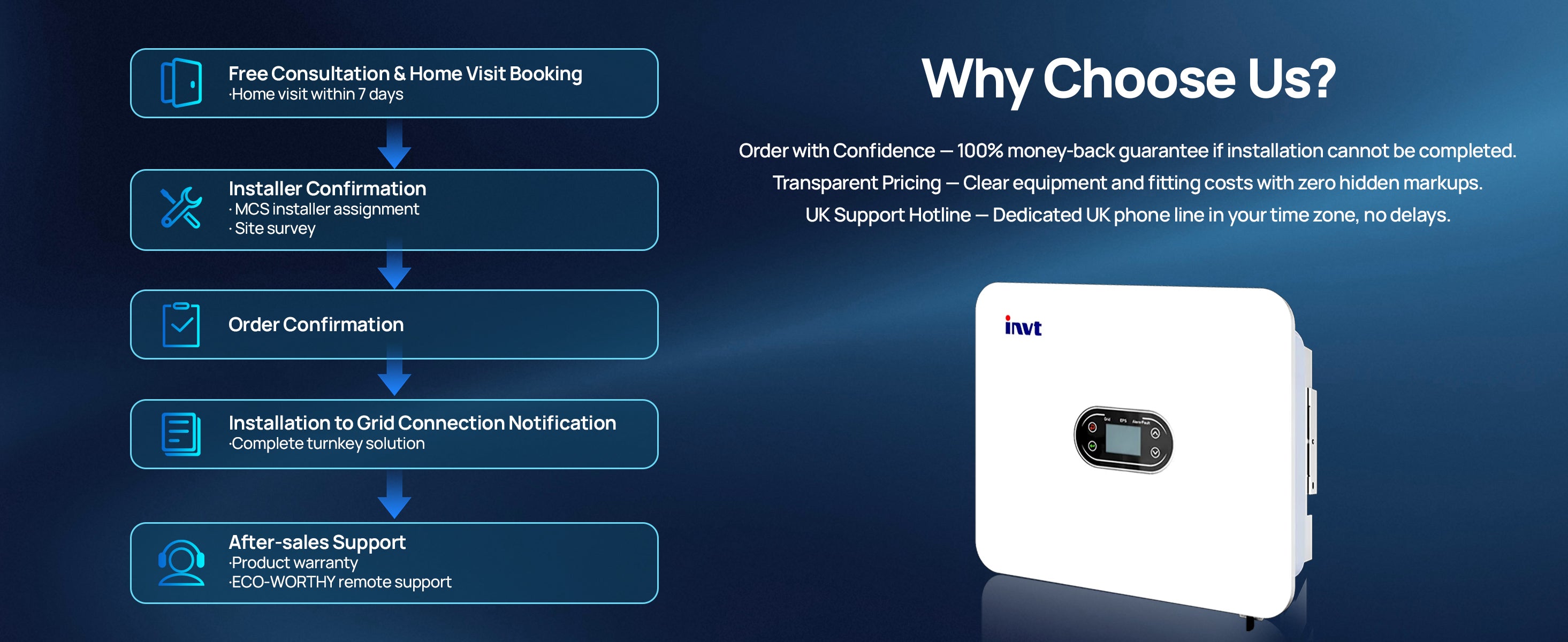
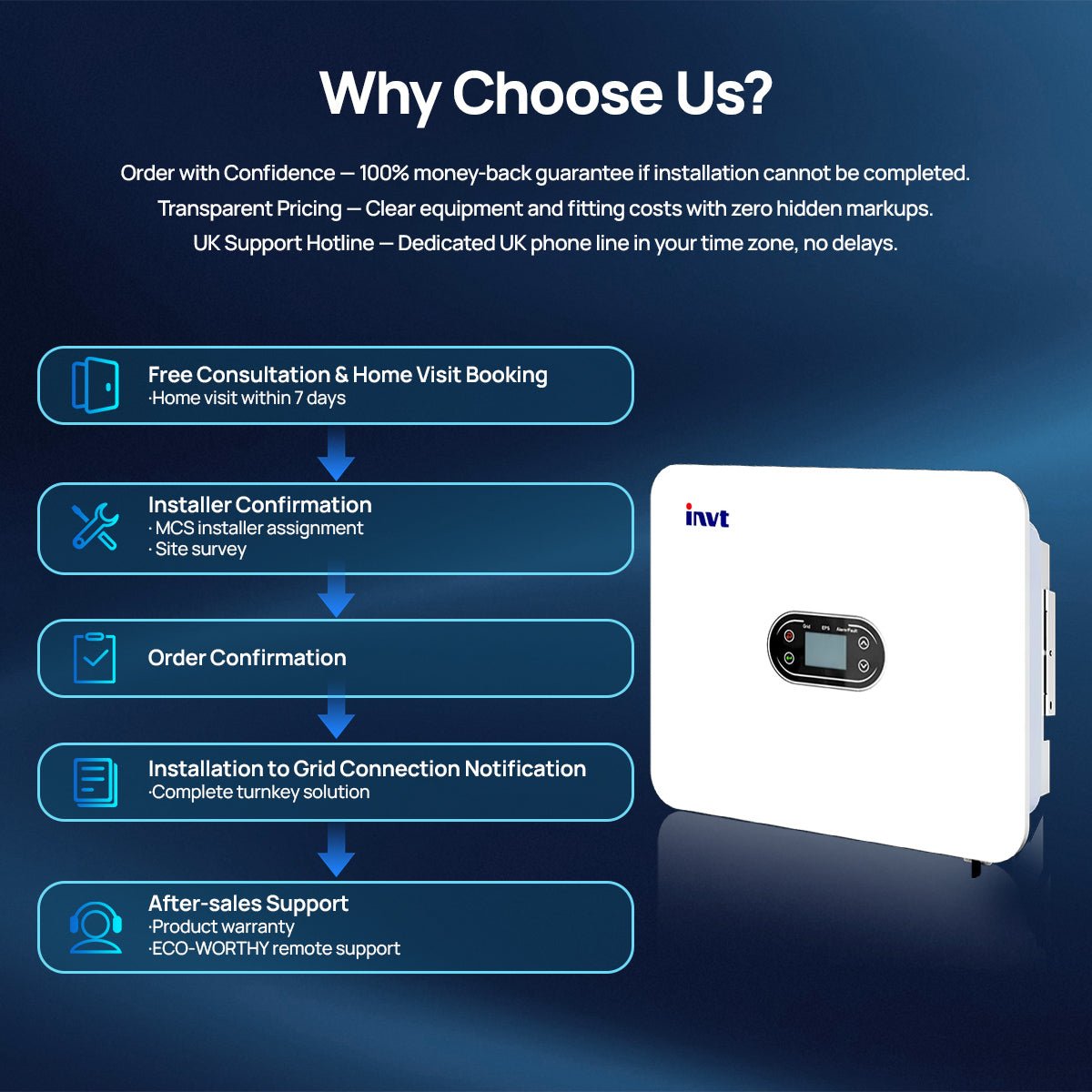
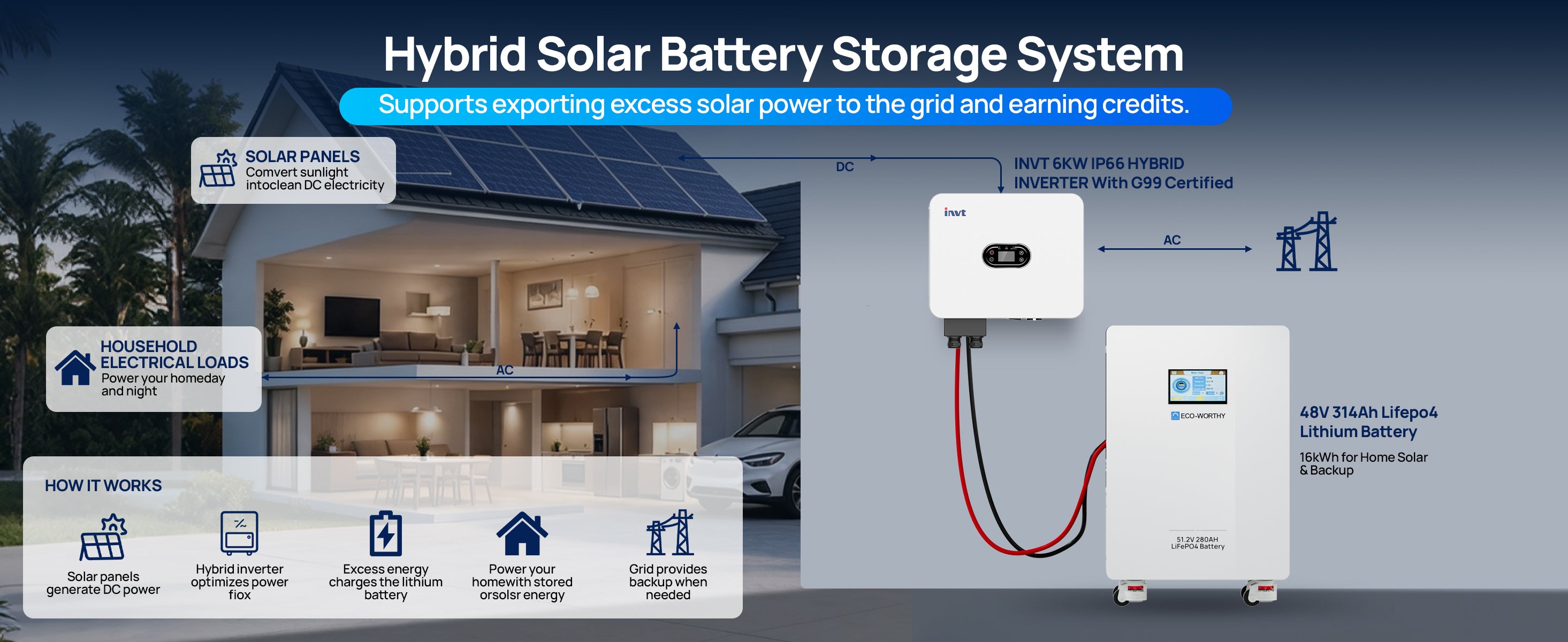
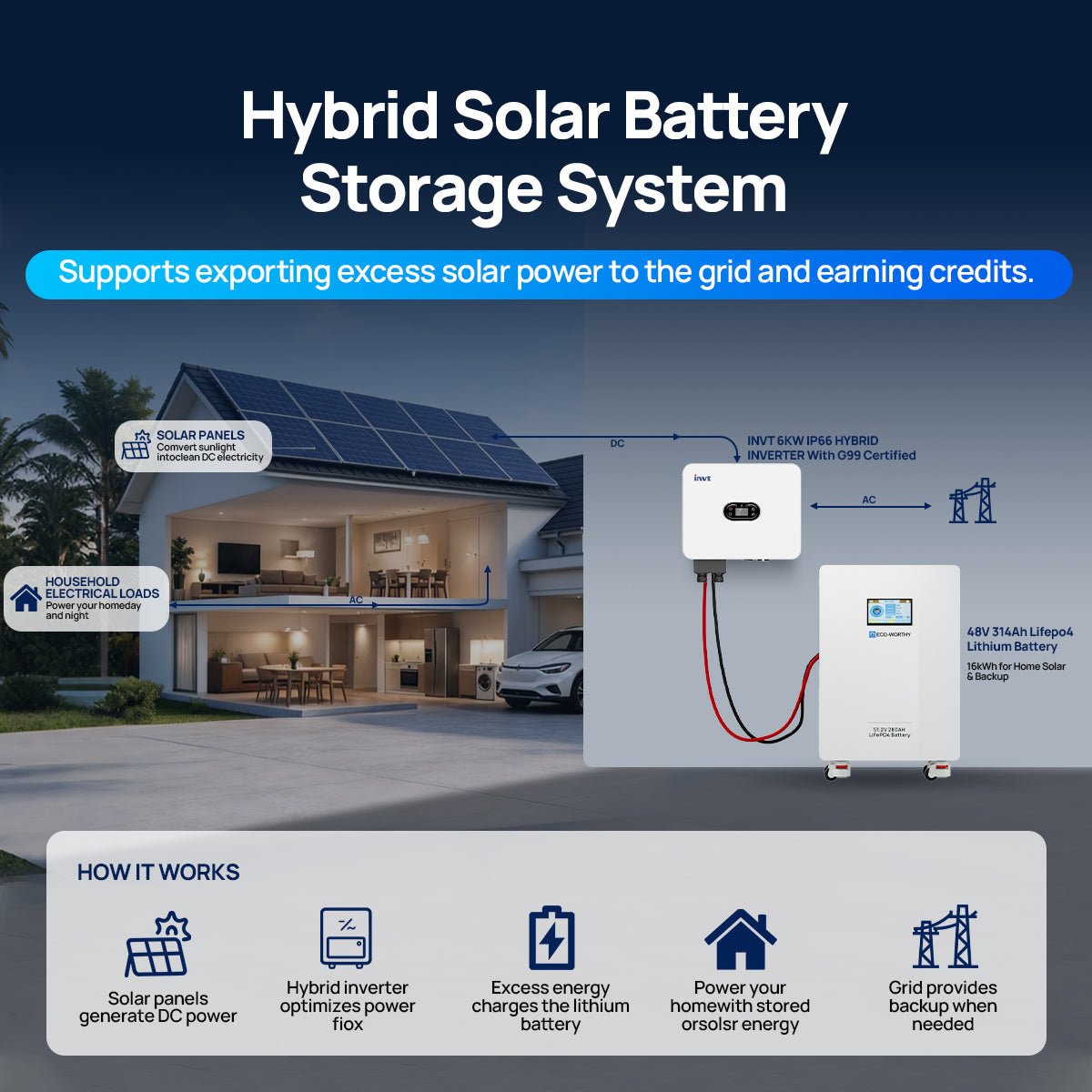


Included in the Box


User manual
Eco-Worthy INVT 6kW IP66 Hybrid Inverter With G99 Certified-user manual
Download